25.9 C
Singapore
Tuesday, February 10, 2026

Depression: a feeling or an illness?

Each one of us has felt depressed at some point in time or we know of someone who has. Most of the time, just like other emotions, it goes away. But sometimes it sticks around. What goes away is depression, which is the feeling of sadness, as it is also defined in the Oxford Dictionary. But Depression, with the capital ‘D’, is a medical illness with a set of signs and symptoms which are correlated with each other, and it is this Depression that sticks around.

Clinically, Depression or Major Depressive Disorder (MDD), has been defined as a mood disorder characterized by mood changes such as sad, low, irritable mood, feeling nothing, or decreased interest or pleasure in the activities the person used to previously enjoy. Disturbances in neuro vegetative functions are also associated with depression and symptoms can include (i) changes in appetite or weight, (ii) sleeping more or less than usual, (iii) feeling restless or slowed down, (iv) fatigue or loss of energy, and (v) decreased concentration. Changes in self-attitude are also seen, and symptoms can include (vi) feelings of guilt or worthlessness, and (vii) recurrent thoughts of death or suicide.

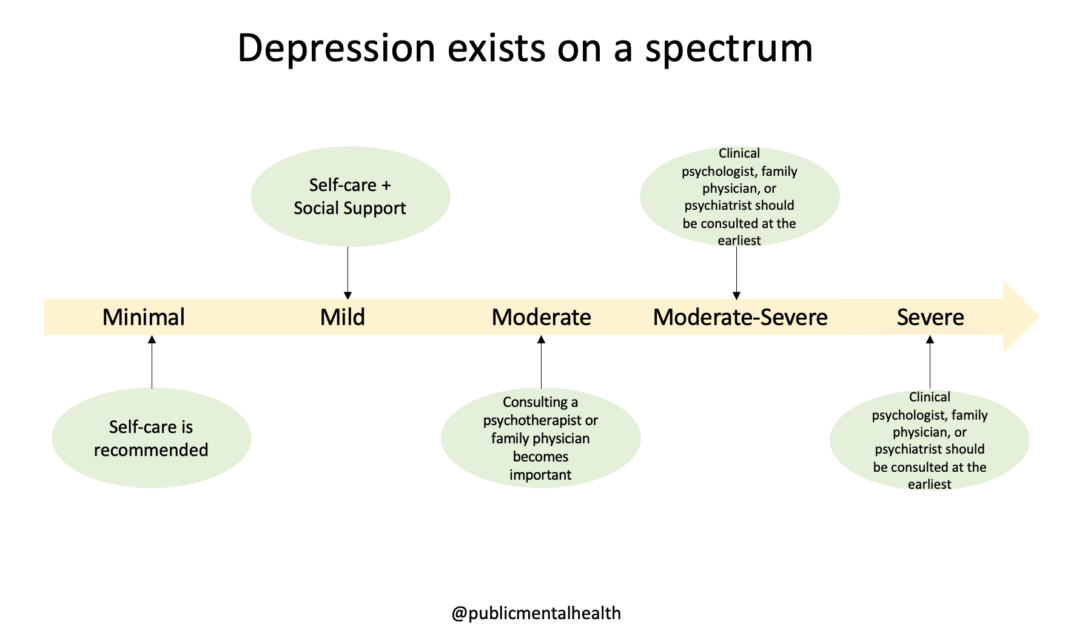
It is for clinical purposes that depression has been categorized as above, and to determine if medical intervention is needed. In practice, however, depression can be best defined by its level of severity based on the symptoms, their duration, and the extent to which they are disabling. There are many tools and questionnaires through which the severity of depression can be measured. Patient Health Questionnaire or commonly known as PHQ-9 is one such tool for self-assessment of depression through which the severity of depression can be determined. It consists of 9 questions that ask you to rate your symptoms on a scale of 0–3. The questionnaire takes less than 3 minutes to complete, and the resulting score based on the responses can range anywhere between 0–27, giving a preliminary estimate of the severity of depression. The severity can be minimal, mild, moderate, moderately severe, and severe.

For minimal depression (total score=0–4), self-care is recommended. Engaging in regular and healthy daily routine, and incorporating activities that promote a sense of achievement, connection with others, and enjoyment are recommended.

For mild depression (total score=5–9), in addition to self-care, seeking social support from family members, friends, peers, or mentors is recommended. It is also important to monitor low mood, changes in depressive symptoms, and their severity consistently using self-assessment. Self-help resources and psychoeducation can also be useful; these can give insight into the possible causes for the symptoms and help develop positive coping strategies.

For moderate depression (total score=10–14), seeking psychotherapy becomes important. Counselors, social workers, peer support specialists, or other mental health workers can all be helpful. A physician can also be consulted to discuss the possibility of pharmacotherapy or referral to a specialist.

For moderately severe depression (total score=15–19), professional help must be sought. A clinical psychologist, family physician, or psychiatrist should be consulted at the earliest so that they can recommend appropriate treatment and next steps.

Lastly, for severe depression (total score=20–27), again professional help must be sought immediately without delay. Psychotherapy and pharmacotherapy in conjunction is the likely treatment in such situations.

It should be however noted that the results from the PHQ-9 questionnaire are only indicative; it’s best to seek professional opinion in case of doubt.

Important points to remember

When dealing with depression personally or interacting with another depressed individual, it is important to know that depression can affect anyone and at any time. Symptoms of depression can start presenting themselves as early as childhood or adolescence.

It is also helpful to reject stigmatizing beliefs and emphasize that depression is not a choice and one cannot merely ‘snap out’ of it. It is not mere sadness and is a clinical illness with underlying biological mechanisms, possible prior genetic vulnerability, and clinical syndrome. It doesn’t define an individual, and it certainly doesn’t mean that the individual is weak.

Educating oneself more about depression can also be helpful. Depression is a complex illness that is often a result of interaction between biological factors, psychological processes, and/or social stressors. Learning more about the biopsychosocial processes can help develop a better understanding of the disease and help the individual chart their path to recovery.

Each one of us has felt depressed at some point in time or we know of someone who has. Most of the time, just like other emotions, it goes away. But sometimes it sticks around. What goes away is depression, which is the feeling of sadness, as it is also defined in the Oxford Dictionary. But Depression, with the capital ‘D’, is a medical illness with a set of signs and symptoms which are correlated with each other, and it is this Depression that sticks around.

Clinically, Depression or Major Depressive Disorder (MDD), has been defined as a mood disorder characterized by mood changes such as sad, low, irritable mood, feeling nothing, or decreased interest or pleasure in the activities the person used to previously enjoy. Disturbances in neuro vegetative functions are also associated with depression and symptoms can include (i) changes in appetite or weight, (ii) sleeping more or less than usual, (iii) feeling restless or slowed down, (iv) fatigue or loss of energy, and (v) decreased concentration. Changes in self-attitude are also seen, and symptoms can include (vi) feelings of guilt or worthlessness, and (vii) recurrent thoughts of death or suicide.

It is for clinical purposes that depression has been categorized as above, and to determine if medical intervention is needed. In practice, however, depression can be best defined by its level of severity based on the symptoms, their duration, and the extent to which they are disabling. There are many tools and questionnaires through which the severity of depression can be measured. Patient Health Questionnaire or commonly known as PHQ-9 is one such tool for self-assessment of depression through which the severity of depression can be determined. It consists of 9 questions that ask you to rate your symptoms on a scale of 0–3. The questionnaire takes less than 3 minutes to complete, and the resulting score based on the responses can range anywhere between 0–27, giving a preliminary estimate of the severity of depression. The severity can be minimal, mild, moderate, moderately severe, and severe.

For minimal depression (total score=0–4), self-care is recommended. Engaging in regular and healthy daily routine, and incorporating activities that promote a sense of achievement, connection with others, and enjoyment are recommended.

For mild depression (total score=5–9), in addition to self-care, seeking social support from family members, friends, peers, or mentors is recommended. It is also important to monitor low mood, changes in depressive symptoms, and their severity consistently using self-assessment. Self-help resources and psychoeducation can also be useful; these can give insight into the possible causes for the symptoms and help develop positive coping strategies.

For moderate depression (total score=10–14), seeking psychotherapy becomes important. Counselors, social workers, peer support specialists, or other mental health workers can all be helpful. A physician can also be consulted to discuss the possibility of pharmacotherapy or referral to a specialist.

For moderately severe depression (total score=15–19), professional help must be sought. A clinical psychologist, family physician, or psychiatrist should be consulted at the earliest so that they can recommend appropriate treatment and next steps.

Lastly, for severe depression (total score=20–27), again professional help must be sought immediately without delay. Psychotherapy and pharmacotherapy in conjunction is the likely treatment in such situations.

It should be however noted that the results from the PHQ-9 questionnaire are only indicative; it’s best to seek professional opinion in case of doubt.

Important points to remember

When dealing with depression personally or interacting with another depressed individual, it is important to know that depression can affect anyone and at any time. Symptoms of depression can start presenting themselves as early as childhood or adolescence.

It is also helpful to reject stigmatizing beliefs and emphasize that depression is not a choice and one cannot merely ‘snap out’ of it. It is not mere sadness and is a clinical illness with underlying biological mechanisms, possible prior genetic vulnerability, and clinical syndrome. It doesn’t define an individual, and it certainly doesn’t mean that the individual is weak.

Educating oneself more about depression can also be helpful. Depression is a complex illness that is often a result of interaction between biological factors, psychological processes, and/or social stressors. Learning more about the biopsychosocial processes can help develop a better understanding of the disease and help the individual chart their path to recovery.

Latest article

Must read