25.9 C
Singapore
Tuesday, February 10, 2026

Arousal and performance

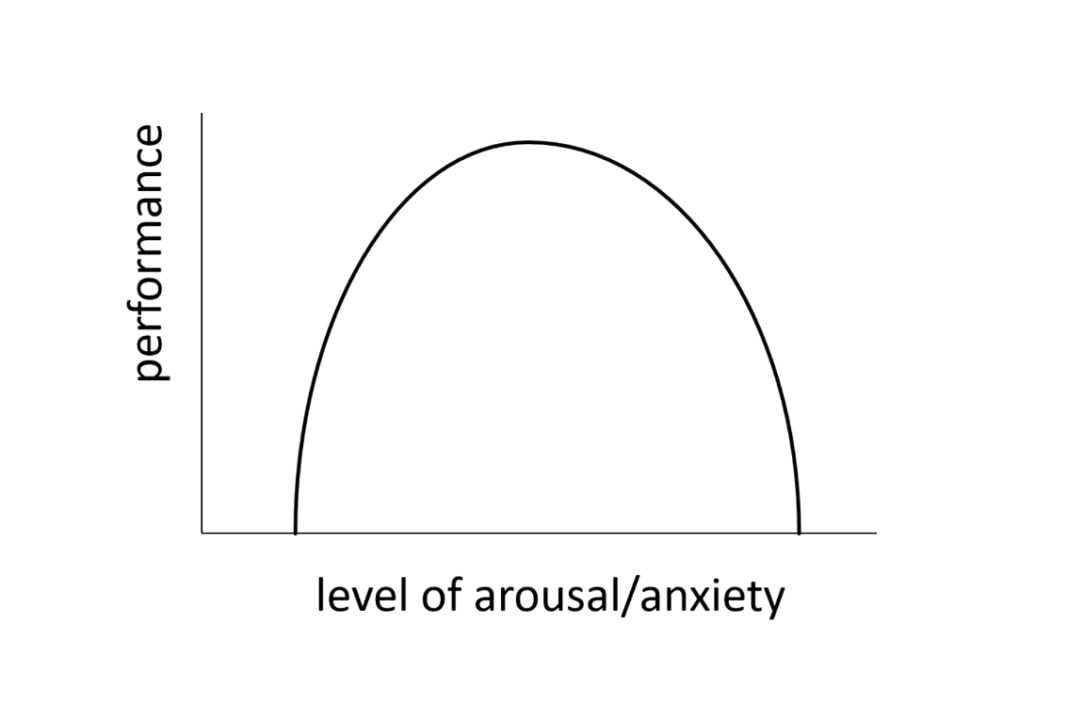
The picture above shows the Yerkes–Dodson Law (1908), a well-established law in psychology. It states that the performance increases with physiological and mental arousal—such as stress or excitement—but only up to an optimal, moderate point. Beyond this point, i.e. at excessive arousal levels, a decline in performance is seen forming the classic inverted U-shaped curve.

In the picture, the y-axis represents performance on a complex mental task, while the x-axis indicates the level of arousal, which closely correlates with anxiety.

Throughout the day, our arousal levels fluctuate. For example, when we first wake up, or in the afternoon when we are tired, our arousal is low, making it difficult to focus on demanding cognitive tasks. After having breakfast, or resting and re-energizing, our arousal rises towards an optimal level that supports effective concentration and mental performance.

However, when arousal becomes too high—say, after excessive caffeine intake or during heightened stress—our focus and concentration begin to deteriorate. Performance peaks only at moderate levels of arousal, where attention and alertness are balanced.

One of the common questions many people wonder, Should individuals with anxiety disorders drink coffee? The answer often depends on individuals’ biological sensitivity. Some people are particularly reactive to caffeine, showing a clear relationship between caffeine intake and anxiety levels, potentially reflecting genetic vulnerability, and might need to avoid coffee.
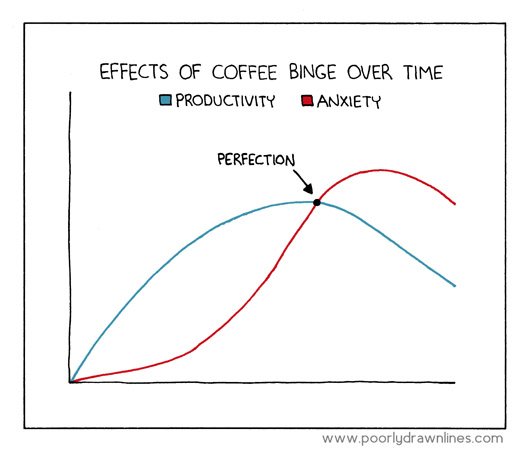
See this image from an online comic depicting the Yerkes–Dodson Law for everyday coffee experiences visually: on the left side of the curve, people feel groggy and unfocused upon waking. After one or two cups of coffee, they reach that sweet spot—alert, focused, and mentally sharp. But after too much caffeine—say, a pot or more—they move to the right side of the curve, becoming jittery, distractible, and unable to concentrate, even on simple tasks, and their productivity declines.

Credit: Dr. Joe Bienvenu

The picture above shows the Yerkes–Dodson Law (1908), a well-established law in psychology. It states that the performance increases with physiological and mental arousal—such as stress or excitement—but only up to an optimal, moderate point. Beyond this point, i.e. at excessive arousal levels, a decline in performance is seen forming the classic inverted U-shaped curve.

In the picture, the y-axis represents performance on a complex mental task, while the x-axis indicates the level of arousal, which closely correlates with anxiety.

Throughout the day, our arousal levels fluctuate. For example, when we first wake up, or in the afternoon when we are tired, our arousal is low, making it difficult to focus on demanding cognitive tasks. After having breakfast, or resting and re-energizing, our arousal rises towards an optimal level that supports effective concentration and mental performance.

However, when arousal becomes too high—say, after excessive caffeine intake or during heightened stress—our focus and concentration begin to deteriorate. Performance peaks only at moderate levels of arousal, where attention and alertness are balanced.

One of the common questions many people wonder, Should individuals with anxiety disorders drink coffee? The answer often depends on individuals’ biological sensitivity. Some people are particularly reactive to caffeine, showing a clear relationship between caffeine intake and anxiety levels, potentially reflecting genetic vulnerability, and might need to avoid coffee.

See this image from an online comic depicting the Yerkes–Dodson Law for everyday coffee experiences visually: on the left side of the curve, people feel groggy and unfocused upon waking. After one or two cups of coffee, they reach that sweet spot—alert, focused, and mentally sharp. But after too much caffeine—say, a pot or more—they move to the right side of the curve, becoming jittery, distractible, and unable to concentrate, even on simple tasks, and their productivity declines.

Credit: Dr. Joe Bienvenu

Latest article

Must read